Predictive
Maintenance Services
Cypherox builds predictive maintenance solutions that analyse equipment data to flag failures before they happen, reducing unplanned downtime and the cost of reactive repairs.
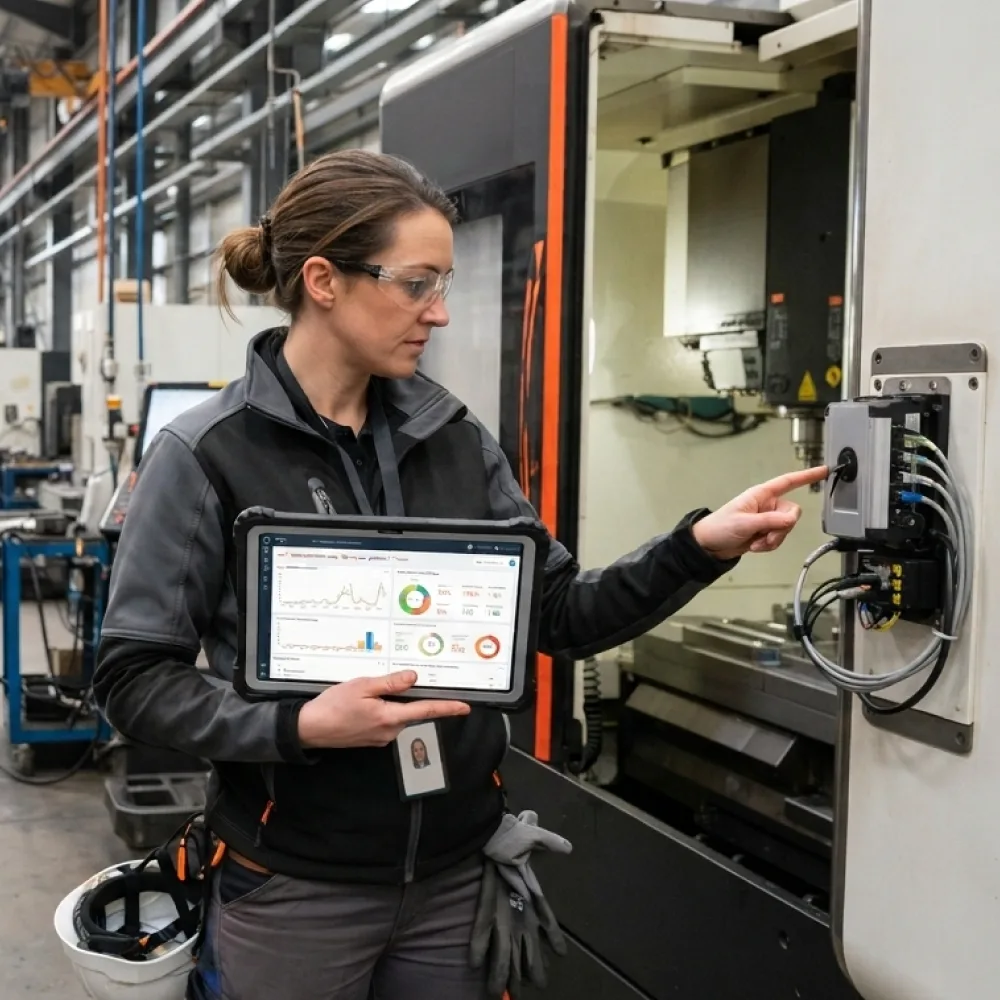
When Equipment Failure Costs More Than Prevention
Scheduled maintenance replaces parts on a calendar, whether they need it or not, while unplanned failures still happen between checks. Both approaches waste money in opposite directions, one on unnecessary work, the other on downtime and emergency repairs. Predictive maintenance software closes that gap by reading sensor and equipment data continuously and flagging problems while there is still time to act.
Scheduled maintenance replaces parts regardless of actual condition.
Unplanned failures halt production without warning or preparation time.
Reactive repairs cost more than planned intervention in most cases.
Manual inspection cannot track every asset continuously at scale.
Condition Based Alerts
Maintenance is triggered by actual equipment condition, not a fixed calendar.
Early Failure Detection
Patterns in sensor data flag developing issues before breakdown occurs.
Reduced Unplanned Downtime
Fewer surprise failures mean fewer stopped lines and emergency call outs.
Built to Scale
Monitors a handful of machines or an entire facility without redesign.
What Is Predictive Maintenance
and How We Build
It
Predictive maintenance solutions combine sensor data, historical failure records and machine learning models to estimate when equipment is likely to need attention, before it fails.
Sensor Data Integration
Connects vibration, temperature and pressure sensors into a single monitoring pipeline for continuous data collection.
Have a Project in Mind? →Failure Prediction Models
Machine learning models trained on historical failure data to estimate remaining useful life for critical components.
Have a Project in Mind? →Real Time Monitoring Dashboards
Gives maintenance teams live visibility into asset condition and flagged alerts across a facility or fleet.
Have a Project in Mind? →Preventive Maintenance Scheduling
Converts predictive alerts into scheduled work orders, replacing fixed calendar maintenance with condition based planning.
Have a Project in Mind? →Anomaly Detection Systems
Identifies unusual equipment behaviour that deviates from normal operating patterns, ahead of visible failure.
Have a Project in Mind? →Integration With Existing CMMS
Connect predictive maintenance data into your existing maintenance management system rather than replacing it.
Have a Project in Mind? →Reduce Downtime and Repair
Costs Without Overhauling Equipment
Predictive maintenance solutions shift spend from reactive repair toward planned intervention. Maintenance teams act on specific equipment conditions instead of a blanket schedule, unplanned downtime drops as failures are caught earlier and parts and labour get allocated to the assets that actually need attention.
Shifts from reactive repair toward planned intervention.
Reduces unplanned downtime by catching issues before failure.
Allocates maintenance labour to assets that need it most.
Extends equipment life through earlier, targeted intervention.

Talk Through Your Predictive Maintenance Requirements
Speak with someone who will ask about your equipment, existing sensor data and current maintenance approach, then outline a practical predictive maintenance solution.
Book a CallHire Dedicated Developers
Predictive maintenance projects are delivered by engineers who work across sensor integration, machine learning and data infrastructure, embedded in your delivery process rather than handed off as a single build.
Hardik
Senior AI and ML Engineer
Available NowBuilds production AI systems with LLM integration, agent orchestration and ML pipelines. Handles model evaluation, RAG and deployment.
Skills:
Krupa
Senior Full Stack Engineer
Available NowDelivers web and mobile applications across frontend, backend and API layers. Works with modern frameworks, databases and cloud pipelines.
Skills:
Akash
Senior Cloud and DevOps Engineer
Available NowArchitects cloud infrastructure with automated deployment, monitoring and security: container orchestration, IaC and cost optimization.
Skills:
Predictive Maintenance Built Around Your Industry
The right predictive maintenance approach depends on the equipment type, available sensor data and how maintenance work is currently scheduled.
Manufacturing
Manufacturing plants use predictive maintenance to monitor production line equipment and reduce unplanned stoppages that halt output.
- Monitors critical line equipment for early failure signs.
- Reduces unplanned stoppages that halt full production runs.
- Prioritises maintenance work by actual equipment condition.
Energy and Utilities
Energy operators apply predictive maintenance to turbines, transformers and distribution equipment spread across large sites.
- Tracks condition of dispersed, hard to inspect assets.
- Flags developing faults before they cause outages.
- Supports maintenance planning across large asset fleets.
Logistics and Fleet Operations
Fleet operators use predictive maintenance to monitor vehicle components and reduce breakdowns during active routes.
- Flags component wear before it causes a breakdown.
- Reduces missed deliveries from unplanned vehicle downtime.
- Supports maintenance scheduling around route availability.
Facilities and Building Management
Facilities teams apply predictive maintenance to HVAC, elevators and critical building systems to avoid service disruption.
- Monitors HVAC and critical systems for early degradation.
- Reduces emergency call outs for building equipment.
- Extends equipment life through earlier intervention.
How We Design, Build and Deploy
Your Predictive
Maintenance Solution
The process moves from understanding your equipment and available data through design, development, testing and deployment, with monitoring once the system is live.
The Technology Behind Your
Predictive Maintenance
Solution
Predictive maintenance solutions are built using established machine learning frameworks, IoT infrastructure and cloud platforms suited to your existing equipment and systems.
What
Clients Say
Predictive Maintenance
Questions Answered
These are the questions we hear most often from teams evaluating predictive maintenance software, covering data requirements, accuracy, integration and ongoing support.
Predictive maintenance uses real time equipment data to estimate when failure is likely, while preventive maintenance follows a fixed schedule regardless of actual condition. Predictive approaches typically reduce both unnecessary work and unplanned failures.
Historical maintenance records and some form of sensor or equipment data are typically required. Where sensor data does not yet exist, we can advise on what to capture during scoping.
Accuracy depends on data quality and volume and typically improves as more historical failure data becomes available for the model to learn from over time.
Yes, predictive maintenance data and alerts can be connected to your existing maintenance management system rather than requiring a full replacement.
This depends on the amount of historical data available. Systems with strong historical records produce useful predictions sooner than those starting with limited data.
Yes, though retrofitting sensors may be required first. This is assessed during discovery based on the equipment and monitoring already in place.
We monitor prediction accuracy and alert quality after launch, retraining models and adjusting thresholds based on real world performance.
Let's Scope Your
Predictive
Maintenance Project
If you are evaluating a predictive maintenance solution, the next step is a conversation about your equipment, data and current maintenance approach. We will outline a realistic path before anything is committed.